

A lifetime sport.
A close-knit community.
Healthy outdoor time right in town.
No experience necessary.

Grades 6-8
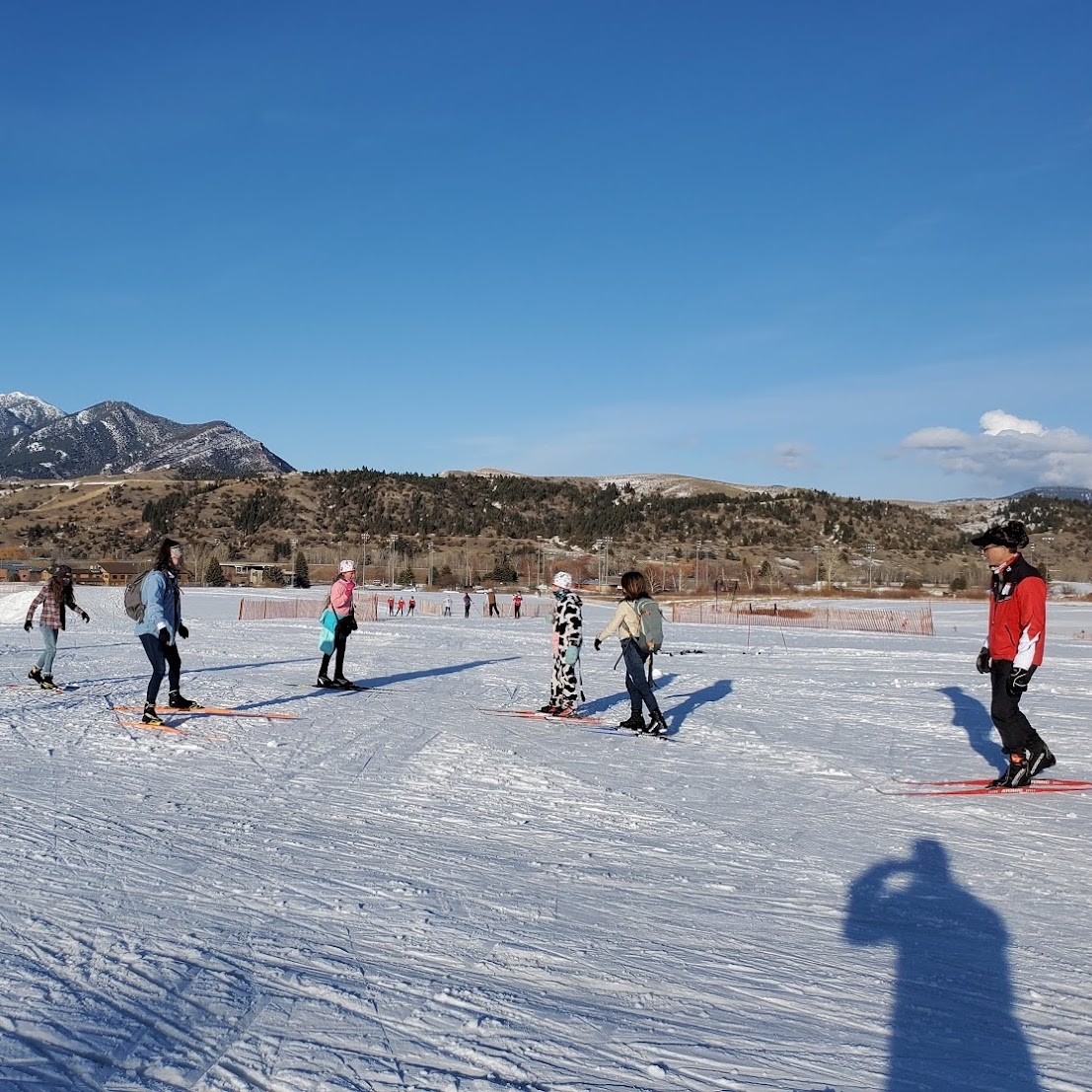
This program serves skiers currently enrolled in middle school. They are grouped separately from the younger skiers. This is a great chance for them to either learn to cross country ski or to further develop their skills in a supportive environment, with their peers.
We take holistic approach to skiing. We work on the fundamentals of skiing: agility, balance, and coordination. And we focus on creating a fun and supportive environment that can support a diverse range of skiers. Intro skiers will do both classic technique (striding) and skate skiing (think hockey skating).
They'll learn double poling and double-pole kick through games, exercises, relays and other fun activities. All BSF coaches are U.S. Ski & Snowboard-certified, and skiers will be placed in groups of the same age and ability to build confidence, community, and skills.
No prior ski experience necessary. Skiers are placed into groups based on age and ability. They can spend multiple years participating in BSF Intro, and when they want to move up to the Development Team (no racing required), they can easily make the move.
Scholarships and equipment assistance available.

TBD: Parent Info Meeting.
July 22: Registration opens at 10 am
Sept 15: Scholarship application deadline
January 13: First week
March 5: Last week
Registration opens for all Intro programs at 10 am on July 22, 2026. We recommend signing up for our mailing list so you don't miss information.

Not sure which registration option is best for your skier? Contact us. We're happy to help. Intro Coordinator: jack.christianson@bridgerskifoundation.org
Payment options:
At checkout, you can choose:
Payment Methods: Credit cards or ACH Bank Transfer
BSF can no longer accept checks or American Express. If you have special financial circumstances, please contact the Program Director.
Payment Plans
When checking out in SkiClub Pro (our registration system) choose "payment plan." The SkiClubPro system will automatically charge you monthly over the course of the payment plan. All program fees must be paid in full by Dec 31.
Late Payment Policy:
All unpaid balances over 30 days past due will be automatically applied to the payment method on file.
Processing fees:
The following processing fees will be added to your cart total. These are the fees charged by the payment processor; not BSF.
Credit cards: 3.5% fee
Bank ACH : 2.4%
Our Middle School Intro skiers will be learning both techniques of cross country skiing - skate and classic. One day a week will be a designated skate ski day, and the other day will be classic.

In classic skiing, you use grip on the base of your skis to help propel you forward. This grip can either be fish scales built into the base or wax that is applied to the base.

Skate skis, on the other hand, are free of any grip on the bottom of the ski. This allows the ski to glide freely while you use a skating motion (think ice skating) to propel yourself forward. While there are skis that can be used for both skate and classic, we recommend that U10-U16 skiers have two separate pairs of skis. (With one pair, you (the parent) have to scrape off kick wax and apply glide wax between each session.) BSF has a limited supply of skate gear that we rent out for the season.
BSF offers a generous scholarship and financial aid program. Applications are due Sept 15.
Please note: If you need assistance, apply for it! These funds are meant to keep kids skiing. Applications are confidential, and we take into account all your circumstances, not just taxable income. (Too often, we see families assume they make too much money to qualify for help, and yet they are considering limiting participation in a program because of the cost. Apply! )
Tues/Thursdays meet at the Lindley Park Pavilion. Parking is available on both Cypress and Buttonwood Avenue. NO PARKING in the Lindley Center Parking Lot.
Last-minute schedule changes do sometimes occur: we'll announce those as needed, via email and the Team app.
Anyone 10+ may also opt to join us for summer camps. All are welcome. Even nonskiers. No prior fitness or ski skills necessary. We hike, bike, play games, and enjoy Montana summers. You can also opt for the Fall & Winter Development Team offering, for fall dryland. Summer dryland & camps page.
When you register for the program, you will be added to an email list. Your coaches will send weekly emails with the full schedule, important notes, and info for parents. Last-minute changes may also be emailed. (It’s important that you do not unsubscribe to any BSF emails, as this is our main mode of communication in the winter.) If for some reason, you are not receiving emails from the Intro Coordinator, let us know!
We may also use the Team Reach app, for schedules and last-minute communications.
(Suggested donation calculated based on an average volunteer session of 3 hours and the industry standard value of volunteer time ($25/hour).)
One of the ways BSF keeps program fees lower is through volunteer hours. Without your volunteer hours, we would need to use additional paid staff to fill the void; this would increase program costs significantly, which would also make it more difficult for some families to afford BSF. When only a small percentage of BSF parents take on the brunt of volunteer hours, it leads to volunteer burnout.
We have openings for help at practices, organizing ski and fundraising events, helping at the events themselves, as well as trail work and volunteering for our community trails. We encourage you to volunteer for ANY program--Nordic, Alpine, Freestyle, or trails. If you have a specific skill set you think would be helpful, please let us know. There are always little things we need, from photography, to database entry, to hanging up posters around town.
We highly encourage BSF athletes to volunteer as well, not just parents!
We post signup sheets and volunteer needs throughout the year at: https://www.bridgerskifoundation.org/about/volunteers
Classic Skis
Skate Skis
Combi Boots
Poles
CLASSIC SKIS: Skiers in the Intro groups should use fish-scale (waxless) classic skis. We do NOT recommend 3-pin bindings; they tend to get stuck in the groomed tracks.
We do not recommend waxable classic skis for U6/U8/U10 age groups. But, if you do start looking towards a pair of waxable classic skis, which is what most U12 Development Team skiers begin to use, please know that parents are required to put kick-wax on their own child’s skis (BSF Intro coaches do not wax kids skis).
Classic sizing:
Skis - Classic skis should be approximately the height of the child or up to their wrist when their arm is raised above their head.
Poles - Classic poles should reach between the armpit and the shoulder.
SKATE SKIS: It is easiest if skiers have both classic and skate skis, rather than a single pair of combi skis. Skate skis are waxable skis; parents are required to keep skis waxed periodically for their Intro skier.
Skate sizing:
Skis - Skate skis should be approximately forehead height up to height of the child.
Poles - Skate poles should reach between the chin and nose height.
COMBI SKIS: Skiers can get by with one pair of "combi" skis and poles. These skis should be wax-able (not fish-scale). Keep in mind that with combi skis you will have to clean the sticky classic kick wax off the skis before your skier will be able to skate on them. (Sometimes, it's just easier to have two pairs!)
Combi sizing:
Skis - Combi skis should be approximately 1-3 inches taller than the child's height
Poles - Combi poles should reach to the top of the child’s shoulder.
BOOTS:
It is suggested for most skiers to have combi boots. These cross-country ski boots will come up over the ankle. Skiers will be able to classic ski and/or skate ski in these boots, enabling them to just have 1 pair of boots.
BINDINGS:
There are 2 binding systems in cross-country skiing, the SNS (Salomon) system and the NIS or NNN system. Please make sure your child’s boots and bindings match! If you have Salomon boots and NNN bindings - they will not go together. Fortunately, most youth combi boots and bindings have NIS/NNN binding systems - but if you’re not sure, please reach out and ask.
Round House: leases classic ($150 in the past) or skate ($180 in the past) skis, boots, and poles for the season. Round House opens their leasing system on October 1 and we recommend reserving early; inventory is limited.
BSF: rents skate skis (~$50) for the season (limited supply). We will email you when the online system is ready for you to reserve your size. We recommend your child get fitted for boots and skis size (at any local retail shop) ahead of time since BSF has a limited supply and may not be able to swap out if the size is wrong. Most of our skate skis are larger sizes.
If you have waxable classic skis please make sure your child’s skis are kick-waxed prior to practice. BSF offers waxing clinics early in the season - don’t miss these!
New Equipment may be purchased at Bangtail Ski Shop, Round House, or Homestake Lodge. Order early at Bangtail and receive discounted BSF prices. Both Bangtail and Round House also offer Nordic team nights each fall.
The Ski Swap held each November at the Fairgrounds. Thousands of items. (It's also one of BSF's biggest fundraisers.) BSF members get in an hour early. If you volunteer at the event, you get in even earlier! Coaches will be on hand to help with equipment selection.
Nordic skiers should dress in layered clothing that allows for a good range of movement and can be removed if the need arises. This prevents overheating but still protects them from the elements. Multiple layers are better than one thick, insulated layer. We recommend a buff/neck warmer for cold and windy days. It is very often colder and windier at Sunset Hills (Lindley) than it is anywhere else in town. Even on a warm winter day, a hat, gloves, warm socks and a windproof jacket (fleece alone is not warm enough in the wind) are important, especially when it starts to get dark earlier in the evening.
Skiers are required to have (at a minimum): waterproof gloves/mittens, a hat, and a windproof jacket layer. Younger skiers (U6 and U8) will often wear their snow-pants. Older skiers (U10 and U12) will often wear a lighter weight weather-proof cross-country ski pant.
Skiers may want to have a headlamp for the first few weeks of practice when it gets dark so early.
Remember to eat a small snack between school and skiing. Cold temperatures lead to higher energy requirements for skiing and keeping warm.
BSF provides hot cocoa and a snack at the end of every Intro session, as long as there is a parent volunteer to organize this!
Bozeman kids are a hardy bunch. Lessons will only be canceled due to extreme temperatures. Coaches will make those decisions as necessary. Sessions will not be canceled or postponed due to lack of snow or snow conditions; instead, we’ll communicate instructions for dry-land training (ski-specific activities for outside when snow is not available).
We do not have make-up days, for either sickness or weather-related cancelations. No refund for canceled or missed practices.
While we don’t put on formal races in the Intro program, we typically organize fun relays. Should they wish, BSF hosts a FUNSKI series, which many kids jump into (often with a parent), including a fun relay with costumes. There are a number of other local races in Montana with youth categories. At this age, it's important to keep racing a fun experience; it's not about the results. As a parent, you can help by focusing on the experience of watching your child: "I love to watch you ski," rather than focusing on their performance.
Also, it's important to note that racing is never mandatory in any of BSF's programs. Ultimately, we hope that most skiers come to love the personal challenge of a race. But they can also choose to participate in the BSF training only, even as they get older.
The Development Team is for the intermediate skier with 1-5 years of Nordic instruction who is ready to ski more often. No racing is required. We continue to use games, exercises, relays and other fun activities to build both skills and age-appropriate endurance.
Devo: grades 4 & 5. Two to three days a week
Devo: grades 6-8. Two to three days a week
Prep Team: grades 7-9 Serves as the bridge to the Comp Team.
Please make yourself familiar with our policies, the BSF Athlete & Parent Handbook, and other important information on the Resources Page.
BSF Newsletters contain regular "Parent Corner" articles to help you navigate the parent/athlete dynamic.
Intermountain Division (IMD) License
There’s a bigger picture to what BSF teaches skiers, when and why. BSF’s programs are consistent with the U.S. Ski & Snowboard Long-Term Athlete Development (LTAD) Systems.
What does that mean? We’re not focused on short-term success—and the hazards (and burnout) that often come with it. Instead, we follow LTAD plans that are individualized and based on science to make sure your child can maximize their long-term potential as a skier (should they wish to do so) and their enjoyment in the sport. We take into account a child’s development physiologically, cognitively and socially, as well as their experience skiing.
This makes it easy for your child to progress through our programs—from Intro to the Development Teams, to the competitive teams, and even on to skiing as an adult Masters athlete.
The LTAD is a living document that changes frequently. View the most up-to-date LTAD for Nordic HERE.)
Ages: 6-10
Years in skiing: 1-4
Days per week: 2-6 or as enjoyable
An emphasis on outdoor recreation. Parents should emphasize activity versus training. Child should play many sports, with active participation in coordination- or balance-based sports.
Increase play to enhance specific elements of physical fitness in open environments. Continue to establish foundations of endurance through sustained activity and play. Add duration to activities and games. Introduce and practice mobility exercises through unorganized play and some structured activities. Use fun playful activities to enhance body awareness, spatial awareness and object manipulation.
Athletes in Phase 2 should have fun on snow, with games and play enhancing both enjoyment and skills. Gaining confidence and coordination while running on skis in multiple directions. Ability to balance on both skis while moving downhill. Tactics are learned through self-discovery by skiing and adapting to different terrain.
Continued cultivation of a fun environment to allow child to continue to experience success. Use simple self-talk cue words to reinforce task-oriented behaviors. Focus on the love of sport.
Compete for fun. Local competition at age-appropriate distances.
(prepuberty before growth spurt)
Girls ages: 10-13
Boys ages: 11-14
Years in skiing: 4-8
Days per week: 2-4 training sessions per week, year round
Emphasize outdoor recreation and introduce fun competition. Continue to participate in many activities and sports. Begin to identify with primary vs. complementary sports.
In phase 3, skiers are gaining comfort in applying various tactics in order to ski terrain using different strategies to achieve differing results.
Coach-athlete relationships, based on trust and respect, are built through effective communication before, during and after practice. Consistency in talk and behavior is key to developing a trusting relationship. Develop positive self talk, work ethic, and perseverance. Focus on the process, not the results.
Local racing leads to state and divisional championships, which may lead to regional events. Race at age-appropriate distances. Suggested number of competitions: 5-15 starts.
(puberty and growth spurt)
Girls: ages: 11-14
Boys: ages 12-15
Years in skiing: 5-9
Days per week: 3-5 in season, 2-4 out of season
Emphasize fun training, with physical fitness becoming an integral part of the season. Increase hours of training with varied volumes and intensity. Continue to participate in complementary sports while identifying clear goals in primary sport.
Athlete is introduced to structured training including aerobic, anaerobic and strength training. In addition to ski training, athlete is engaged regularly in cross-training activities including balance, coordination, endurance, speed and strength building. High intensity and more complex movement patterns are mastered. Dynamic and complex movement patterns are emphasized to achieve a desired outcome on specific terrain and features.
Promote consistent use of self-talk and imagery in training and competition. Begin to challenge athletes with more competition-specific scenarios, but maintain opportunities for athletes to experience success. Identify relevant factors from prior successful performance. Athletes create a detailed list of what they do prior to the competition from a physical, mental, and environmental aspect. Athlete focuses on what they can and can't control.